GALLERIA LONDON: LONDON, ON, CANADA
Daniel Peck's Commentary:
(User submitted April 2006)
The Galleria London is one of the first Canadian dead malls. The structure
itself, located in the heart of downtown London, Ontario, gets significant use
and foot traffic, however, as a traditional shopping mall, it's days are more or
less over.
Wellington Square opened on the site at 335 Wellington Street in downtown
London on November 1st, 1960 as the first enclosed mall in Canada, and the first
enclosed downtown mall in North America.. It featured a five story
Eaton's, a Woolworths, was 400,000 square feet, and had rooftop parking. The
site at Wellington and King Streets was once a McCleary factory.
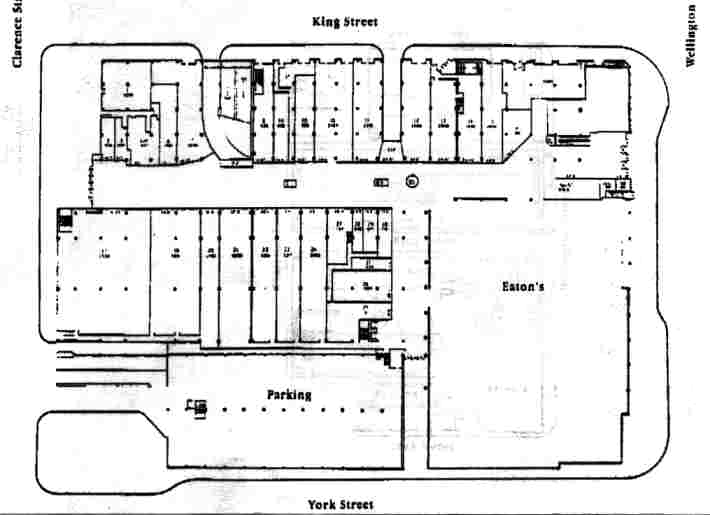
The 1960 floor plan for Wellington Square. It occupied what is now the
lower level, southern portion of Galleria London.
Wellington Square, and downtown London, had the run of retail in the area
until 1971 when Westmount and 1973 when White Oaks malls open as suburban
competition for Wellington Square. By the late 1970s, as provincial
control on retail expansion began to loosen, both areas would begin to drain
retail sales out of the Wellington Square area.
Once London abandoned it's city master plan limiting retail expansion,
Wellington Square began to lose momentum due to the traditional limitations of
downtown shopping: traffic, convenience, and location. In 1980, The five story
Eaton's closed, then re-opened as a scaled down store. Still, the
"Eaton Centre" as it was called, was a chronic under performer.
In 1986, Canadian mall giant Campeau rebuilt Wellington Square into Galleria
London from the ground up. During the two year reconstruction, only Eaton's, the
Elephant and Castle eatery, and Bi-Way remained open. The Galleria was expanded
from 70 stores to 120, and an additional 500,000 square feet were added on to
what was tenatively called "London Square". The square has a racetrack
design on the upper level with two pedestrian bridges over King Street, and a
1500 space underground parking garage. The project cost $150 million
Canadian in 1987 dollars, and ultimately led Campeau into bankruptcy. In
1996, Galleria London, according to surveys the fifth worst performing mall in
all of Ontario, is purchased from RHK for $46 million Canadian by a real estate consortium
managed by the United Food and Commercial Workers Union.
From the 1989 rebuild, Eaton's and The Bay anchored the Galleria London.
However, the property itself, which features 120 spaces for stores and two
anchors in a square that occupied two blocks and included two walkways over King
Street, struggled to maintain tenants as the economy in the area declined. The
Galleria itself took a lot of business from the surrounding business district,
draining downtown London of some of it's vibrancy. 30 years of poor planning on
the part of London Regional Council didn't help either.
The 1997 bankruptcy filing of Eaton's didn't help matters. The story of
Eaton's is in and of itself fascinating, and if you have the chance, you should
read about it here: http://archives.cbc.ca/IDCC-1-69-377-2361/life_society/eatons/.
As Eaton's failed to evolve, blaming the Canadian economy in the early 90s, then
later NAFTA and it's allowance of American retailers into the marketplace, and
the business community in London continued to worsen, the Galleria began hemorrhaging
tenants. When Eaton's filed for bankruptcy reorganization in February, the plan
was to close 31 of 85 stores, including the one in Galleria London, which
averaged sales of only $35 per square foot in a 100,000 square foot store in
1996.
Eaton's store did close, but the external signage and window dressings
remained in the property until early 2000, when the entire chain was shuttered.
The Bay remained as the sole anchor in the Galleria London until March of
2001, then it too closed it's location at the Galleria. A large majority of
retail tenants fled thereafter.
Of the 120 spaces, approximately 20 retail establishments remain. However,
The Bay's anchor property was sold to the London Public Library for $5.8 million Canadian
in February of 2001. The former Eaton's property was converted into offices, and
renamed, somewhat ironically, Wellington Square. Today, the Wellington Square
portion of the property houses Honeywell, Tele Tech telemarketing, and
Stephenson & Sons Insurance. This is impressive, as the economy of
London is such that the city has not added any office space over the last 10
years, yet the former Eaton's property is somewhat successful by real estate
standards.

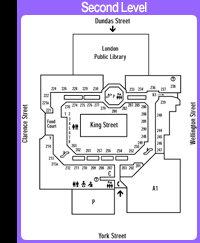
Maps of the Street and Second Levels of Galleria London, built on the
former Wellington Square site in 1986, and reopened in early 1989.
Today, Galleria London serves downtown London as a mixed use property. The
London Public Library has significant facilities in the former Bay location, a
fitness center thrives, several doctors offices occupy space, a bargain Rainbow
Cinemas flourishes there where a Cineplex Odeon once stood, and the University
of Western Ontario's Continuing Studies program is housed there as well. There
is foot traffic, and the food court is moderately successful. As a mall in the
traditional sense, however, Galleria London's days are over. For the
London region, the White Oaks mall, nearer Highway 401, and with more tenants,
parking, and better anchors, is king of retail.
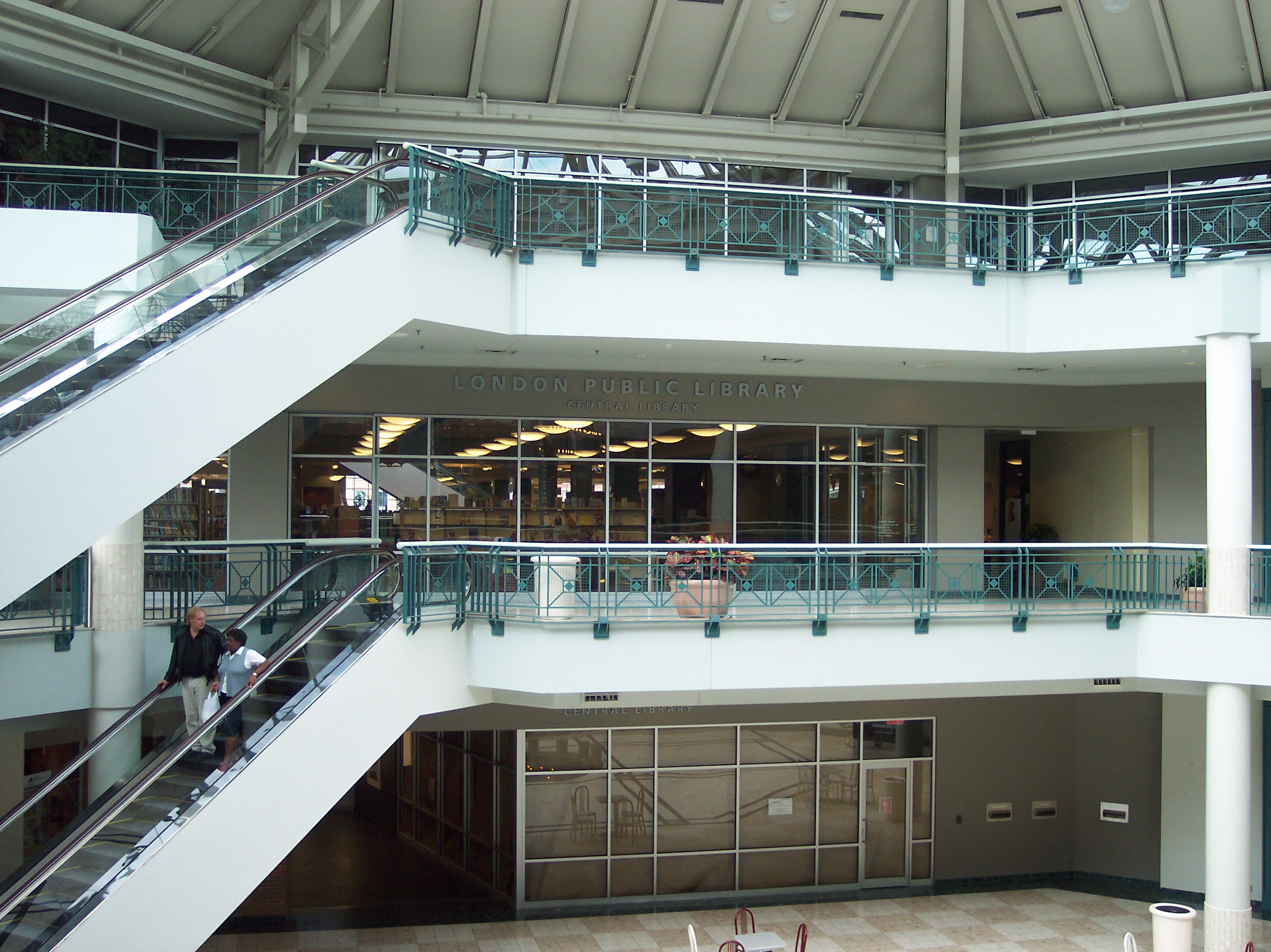
The three story London Public Library, located on the northern end of the
property. This was once The Bay.
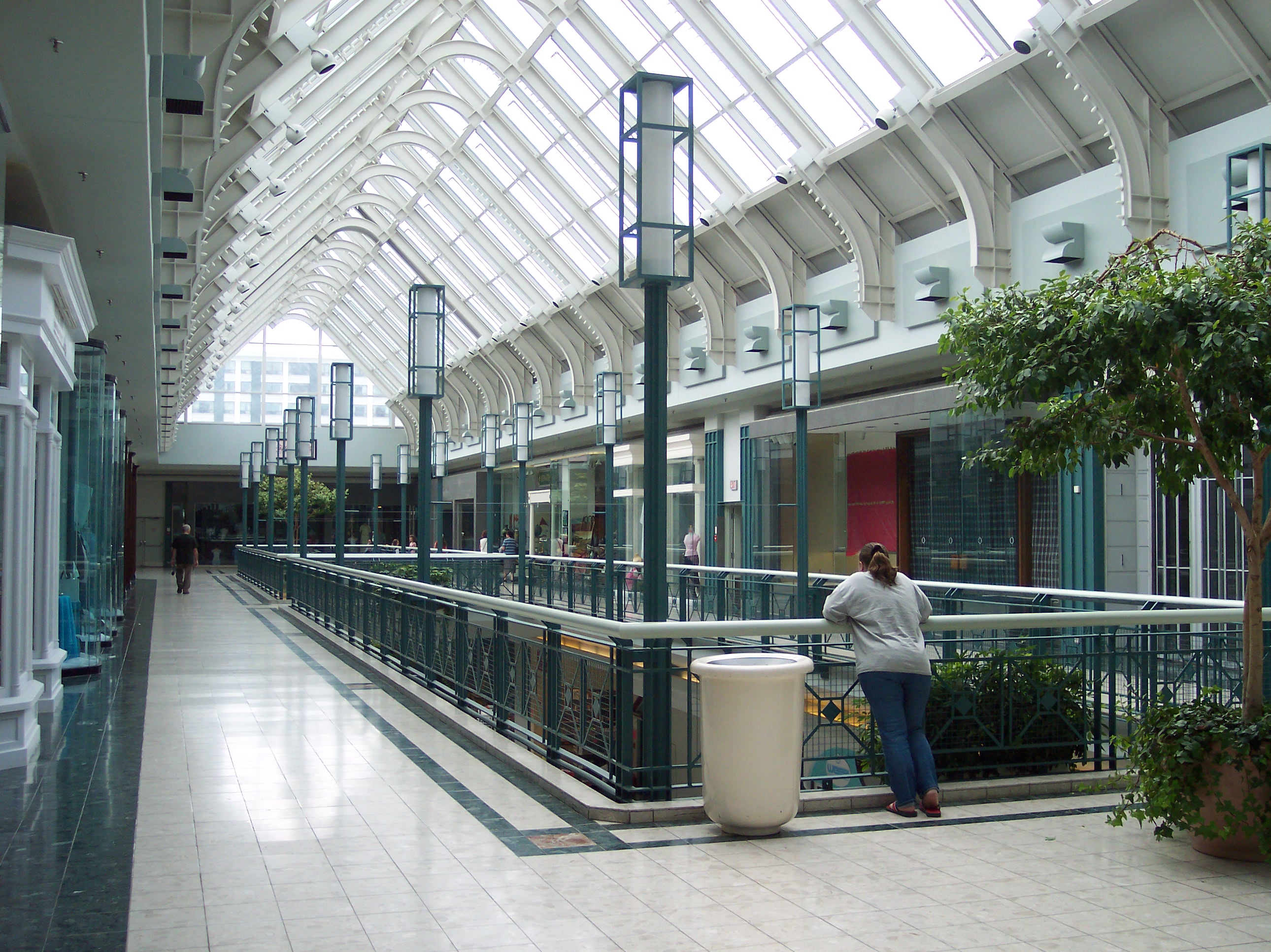
Looking west on the upper level from near the library entrance.

A shot from the upper level, southeast portion of the mall near the
entrance to the former Eaton's location.
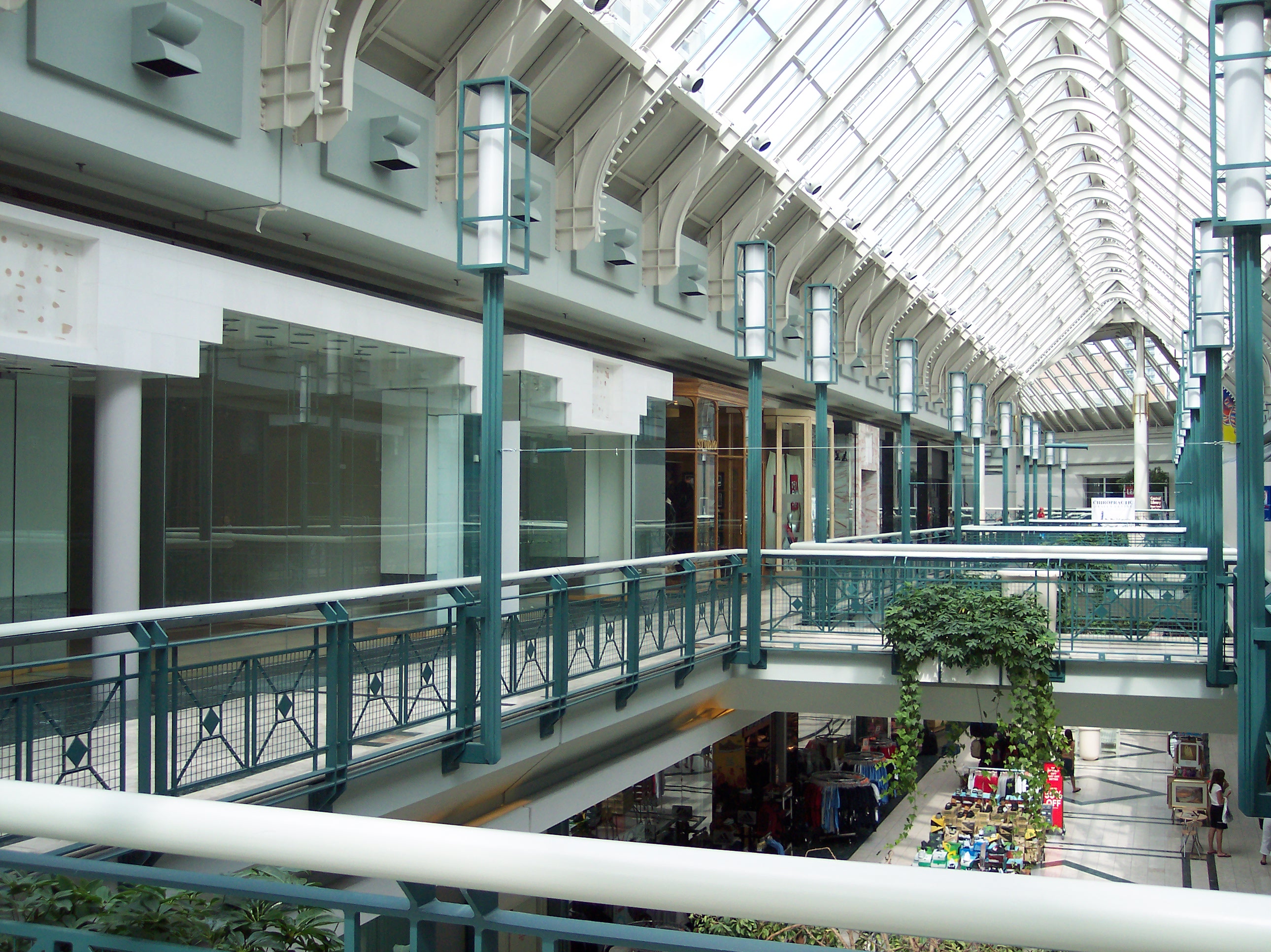
An upper level view near the York Street (East) entrance.
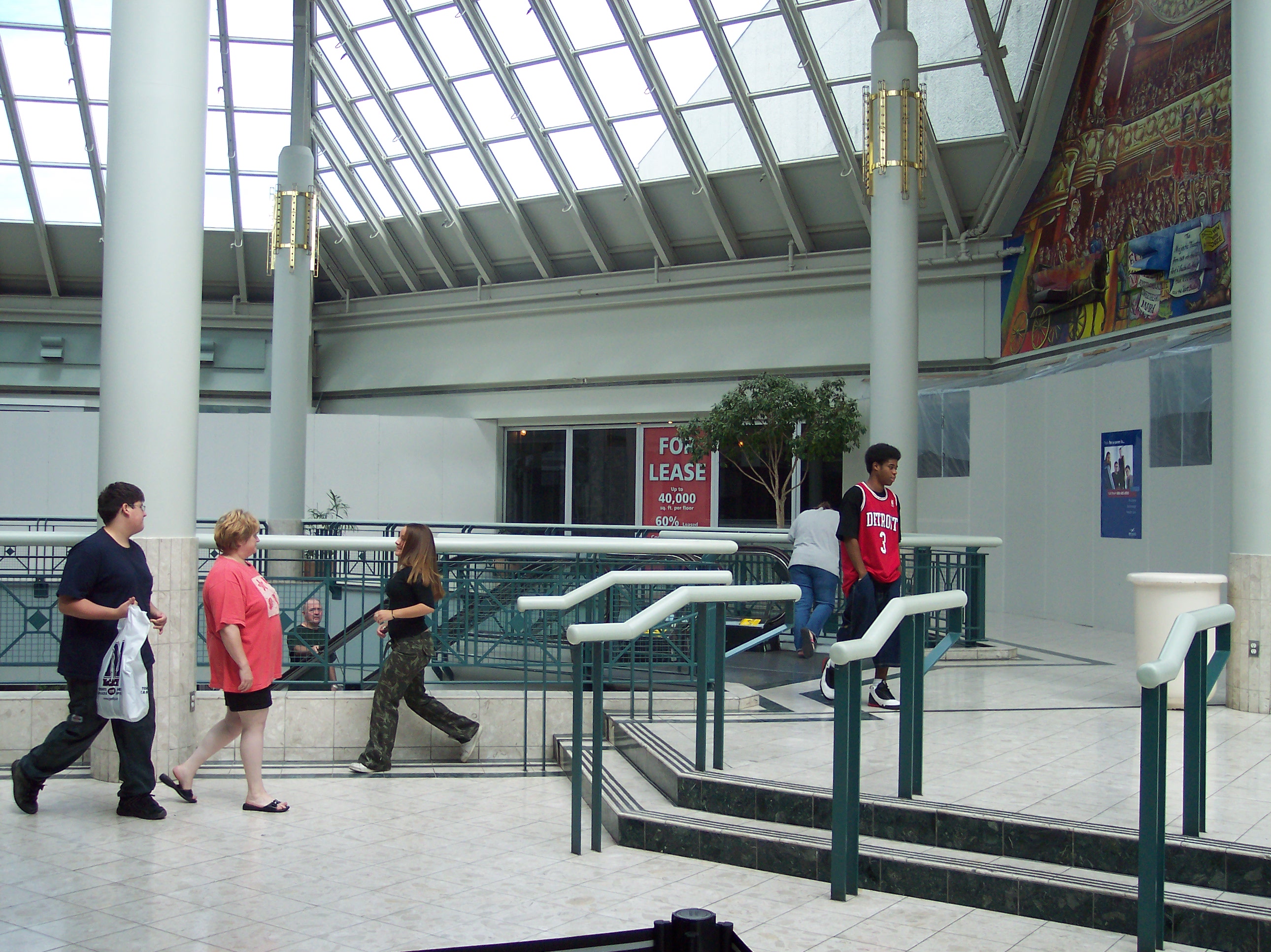
The upper level, former entrance to Eaton's.

Lower level, York Street entrance. This is near the Elephant and Castle,
the only tenant remaining from the Wellington Square days. Goodlife
Fitness occupies the entire lower level of the mall, and is fairly popular, by
all accounts.
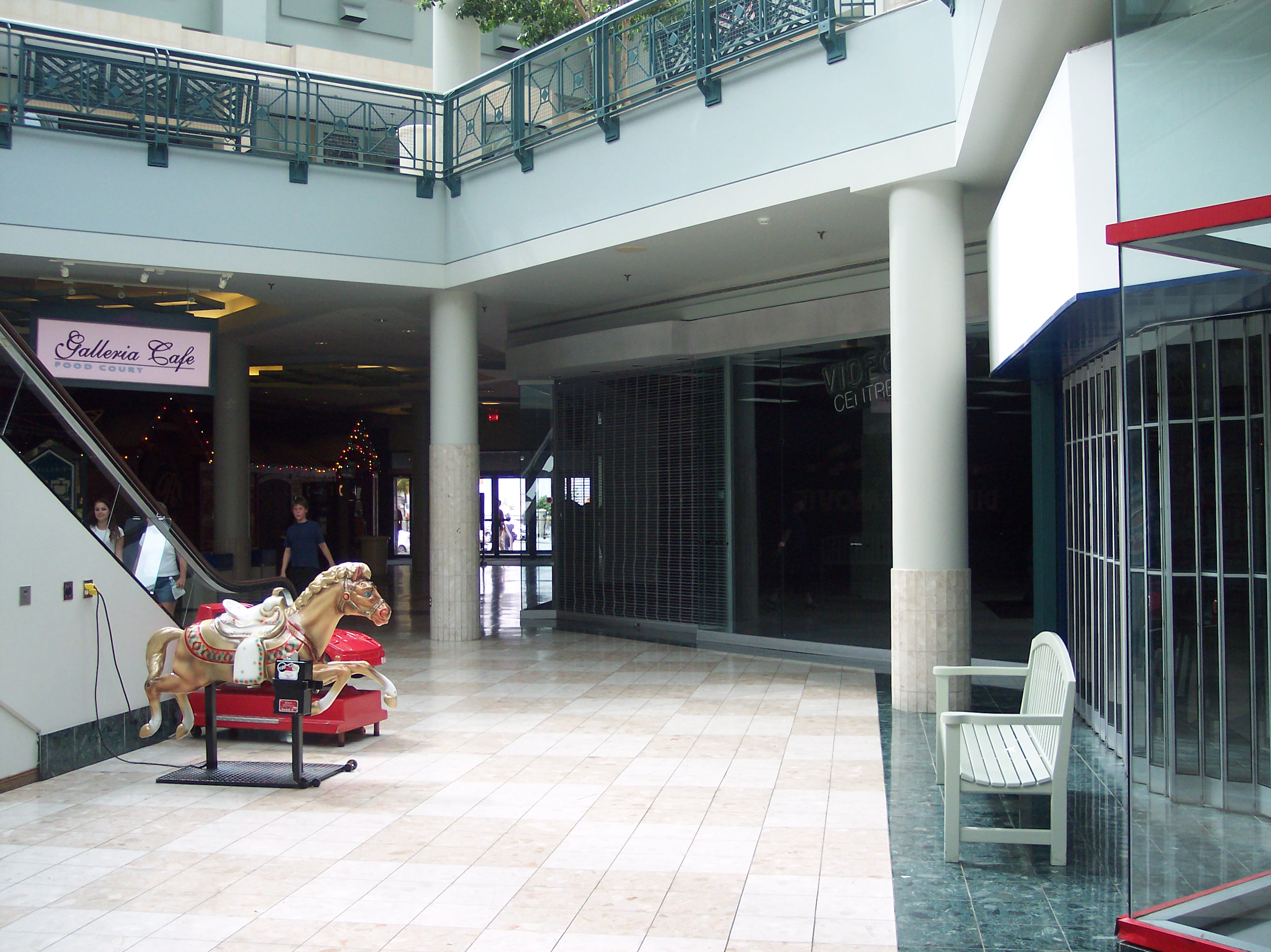
As you walk past Elephant and Castle, the barren state of retail at this
mall begins to set in.
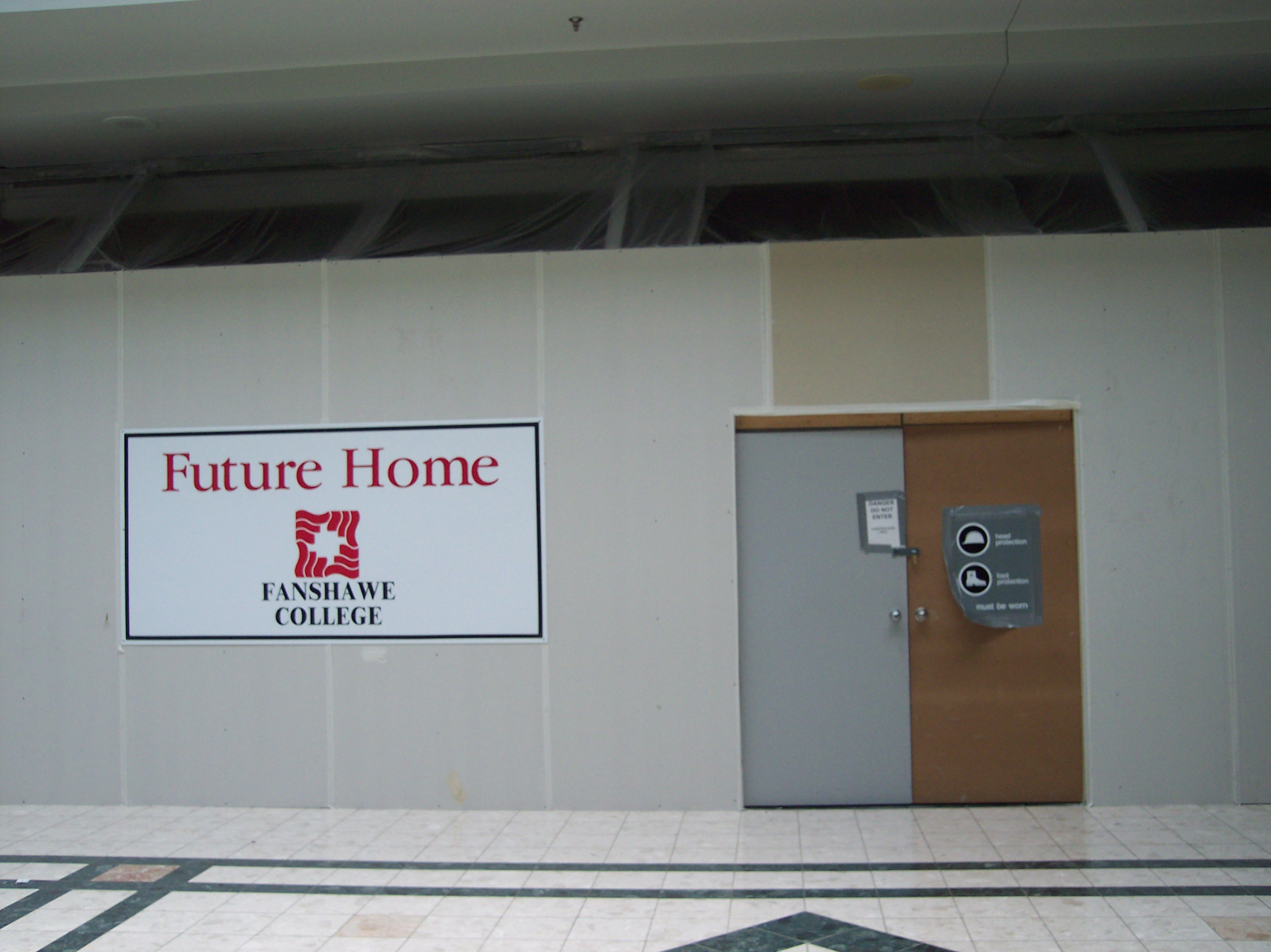
Another portion of the Eaton's space is being converted to classrooms.
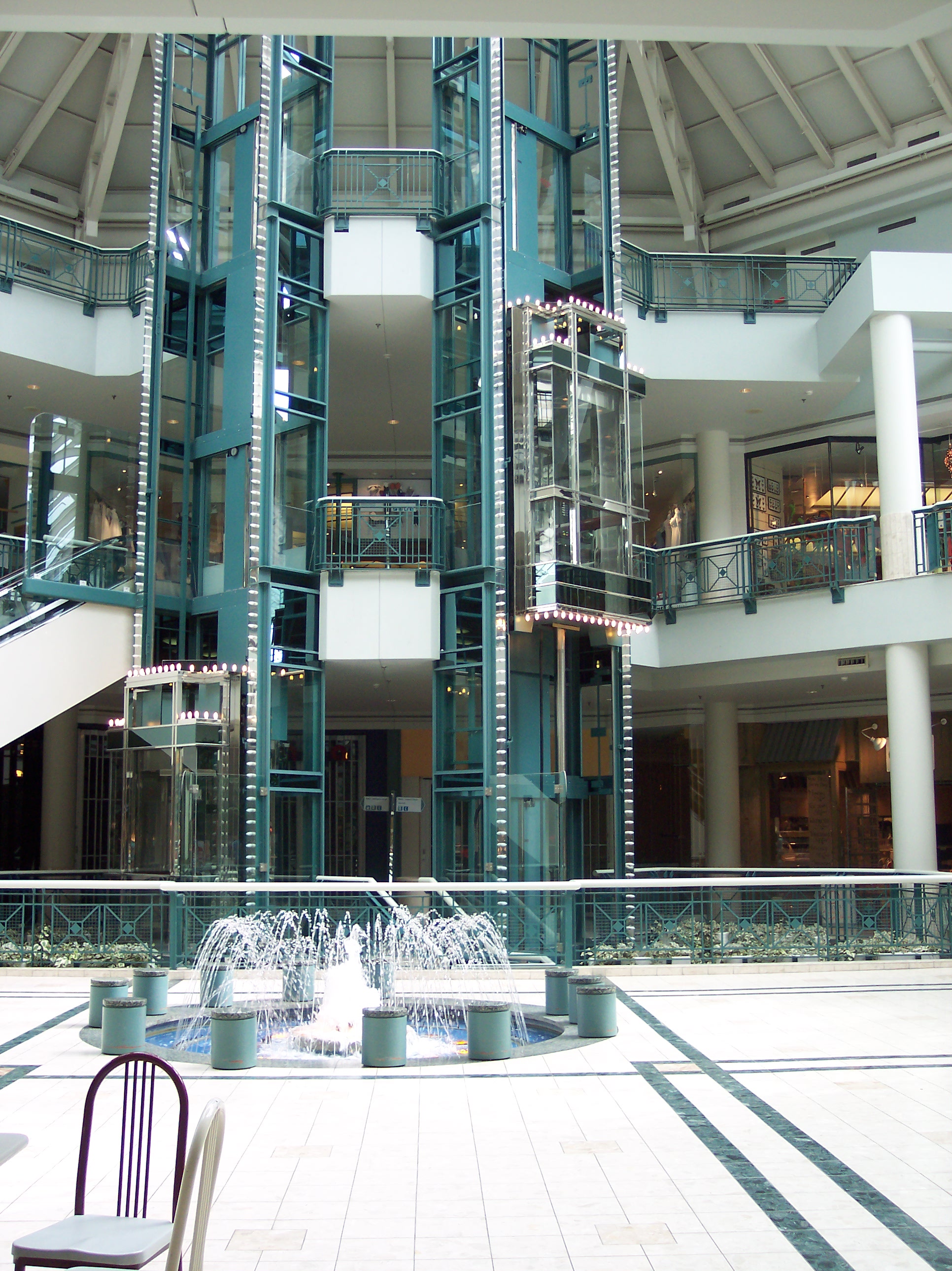
Elevators, fountains, and lights, just like every other mall. These
elevators brought people to and from the parking garage, and let off in front of
the former Bay store.

A shot of the ceiling architecture, looking West from the library.

The Canada Trust/Toronto Dominion Bank towers visible from the roof of the
northeast portion of the mall.
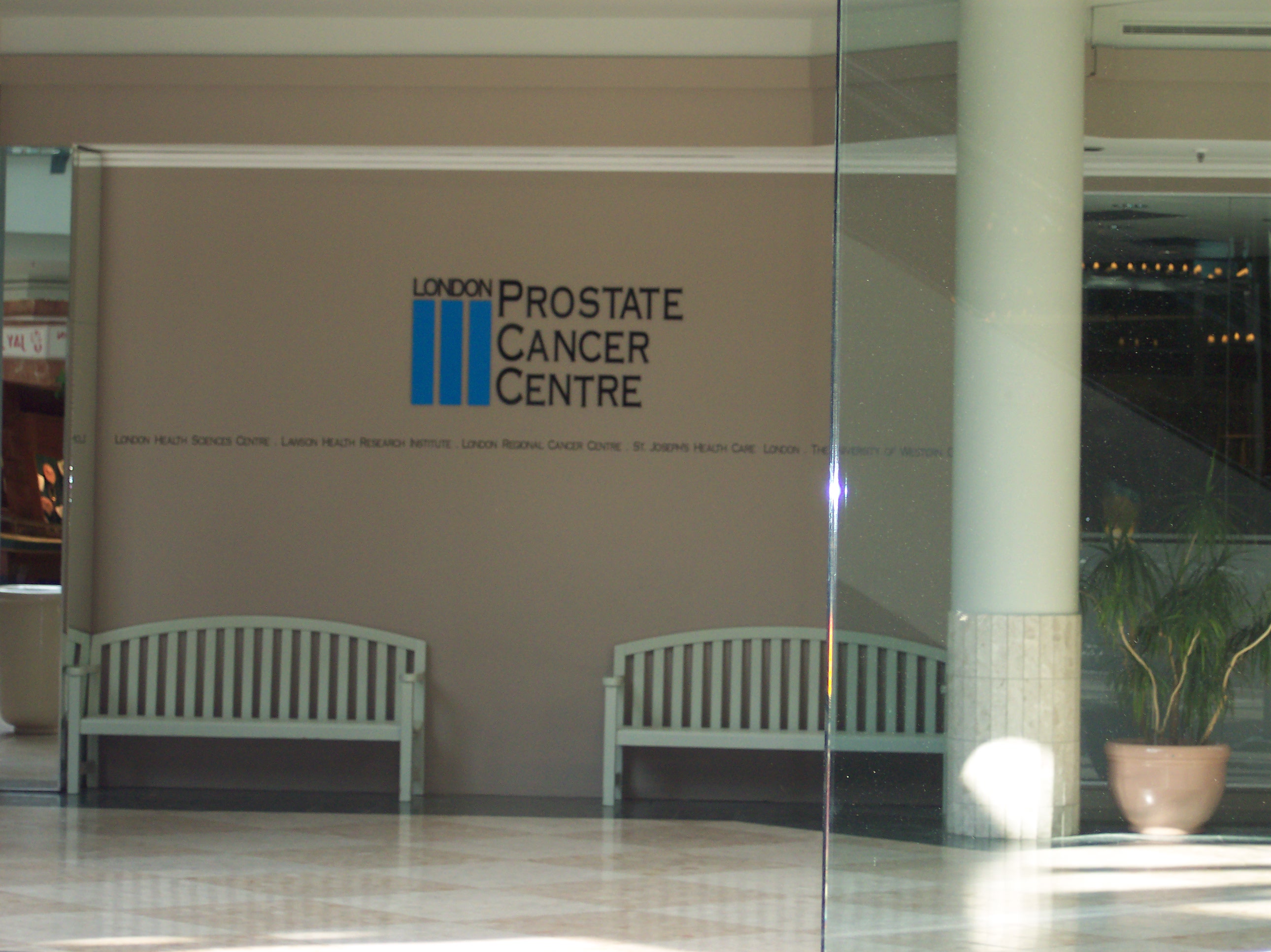
Check out a book, have lunch at Burger King, and get a Prostate exam, all
in the same mall.
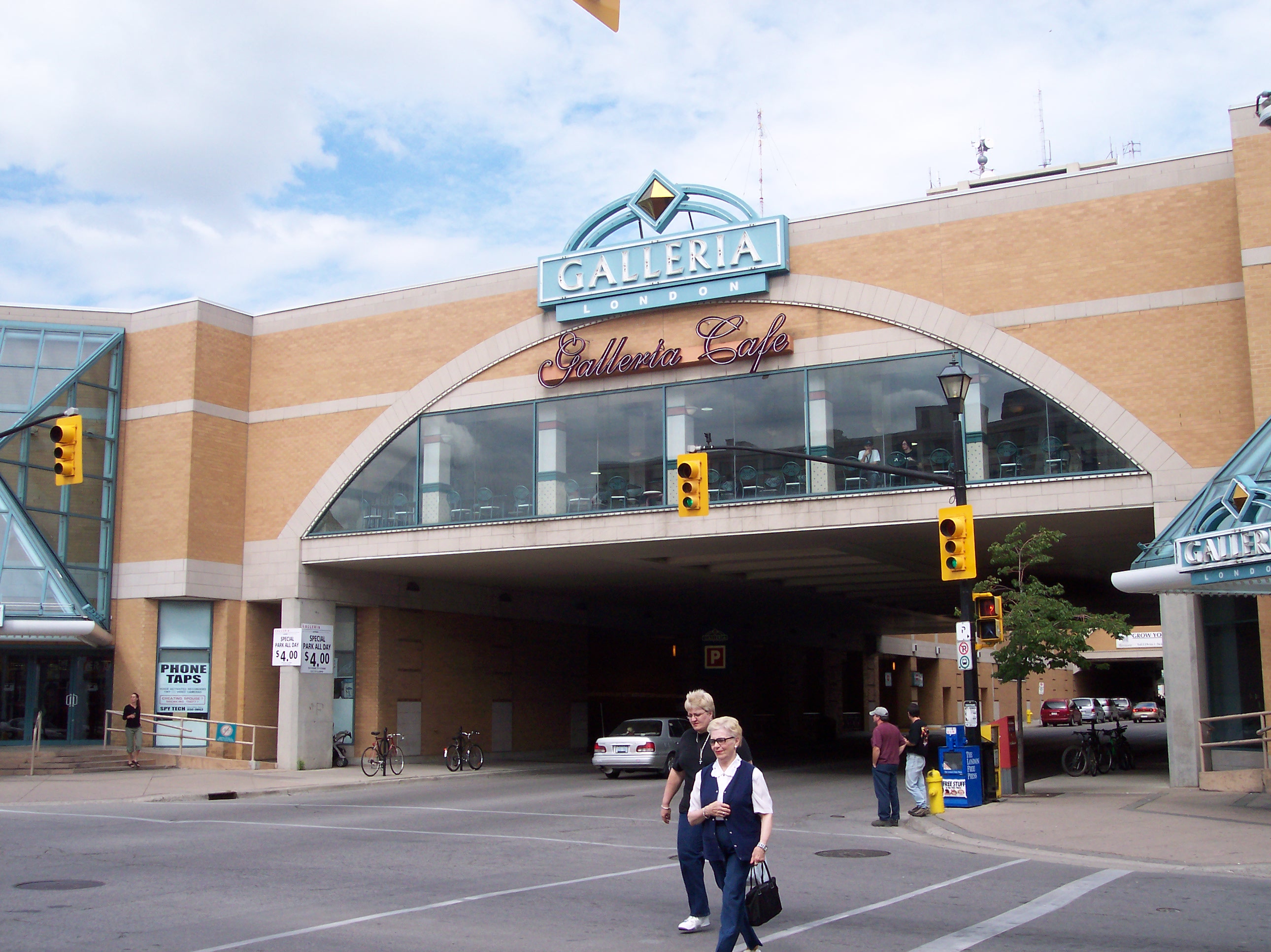
The food court walkway over King Street. This picture faces West (The east
side of the Galleria).
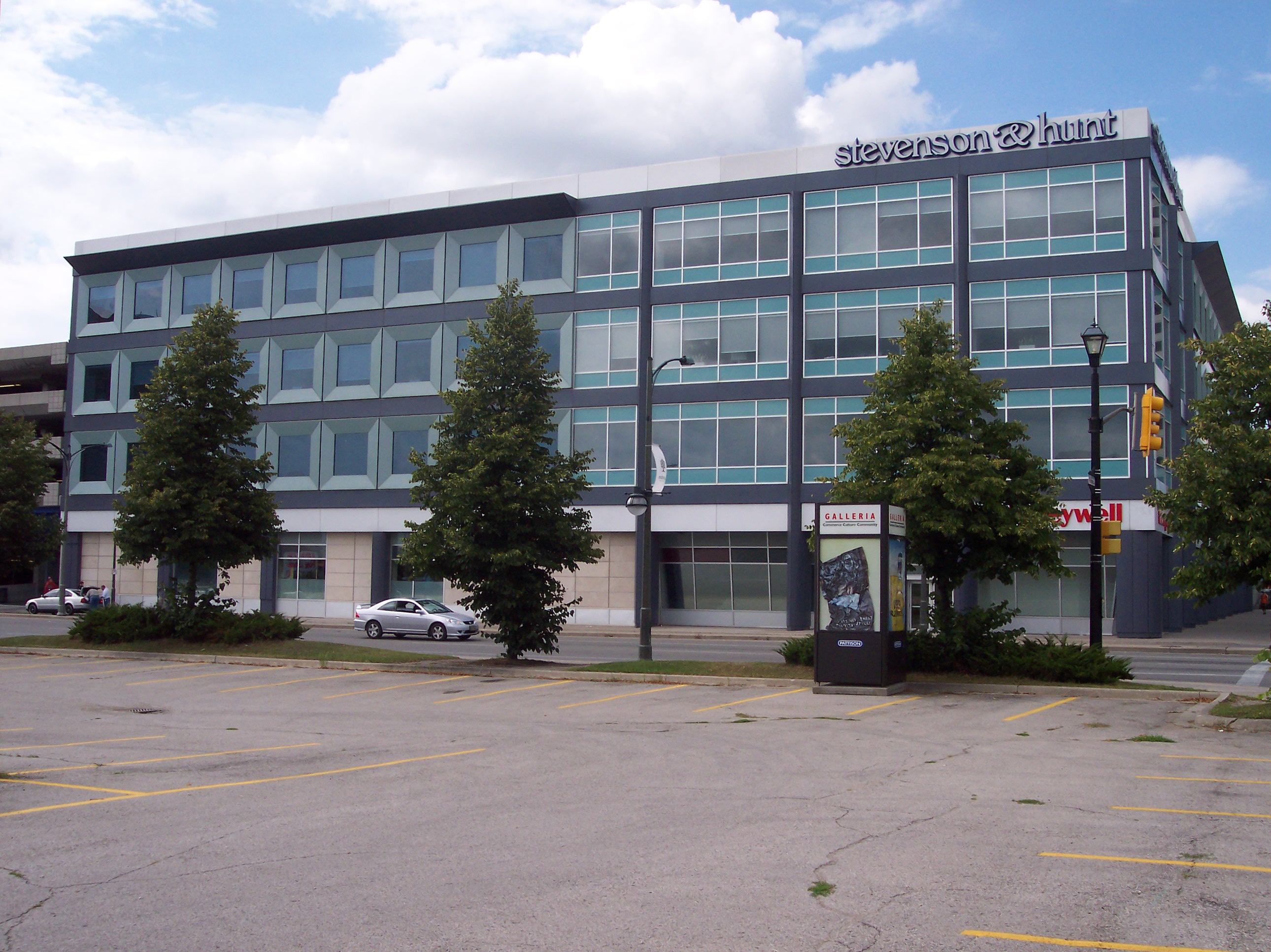
Wellington Square sits on the former Eaton's store space. The first floor
windows used to house displays for Eaton's, and are now frosted over for office
use. This is the South side of the mall, facing York Street. This is also
a remodel of the original Eaton's that sat on Wellington Square throughout the
1960s.

A second walkway over King Street. This is the other side of the Galleria.
The Continuing Studies Program of Western Ontario University exists in part of
the former Eaton's property.
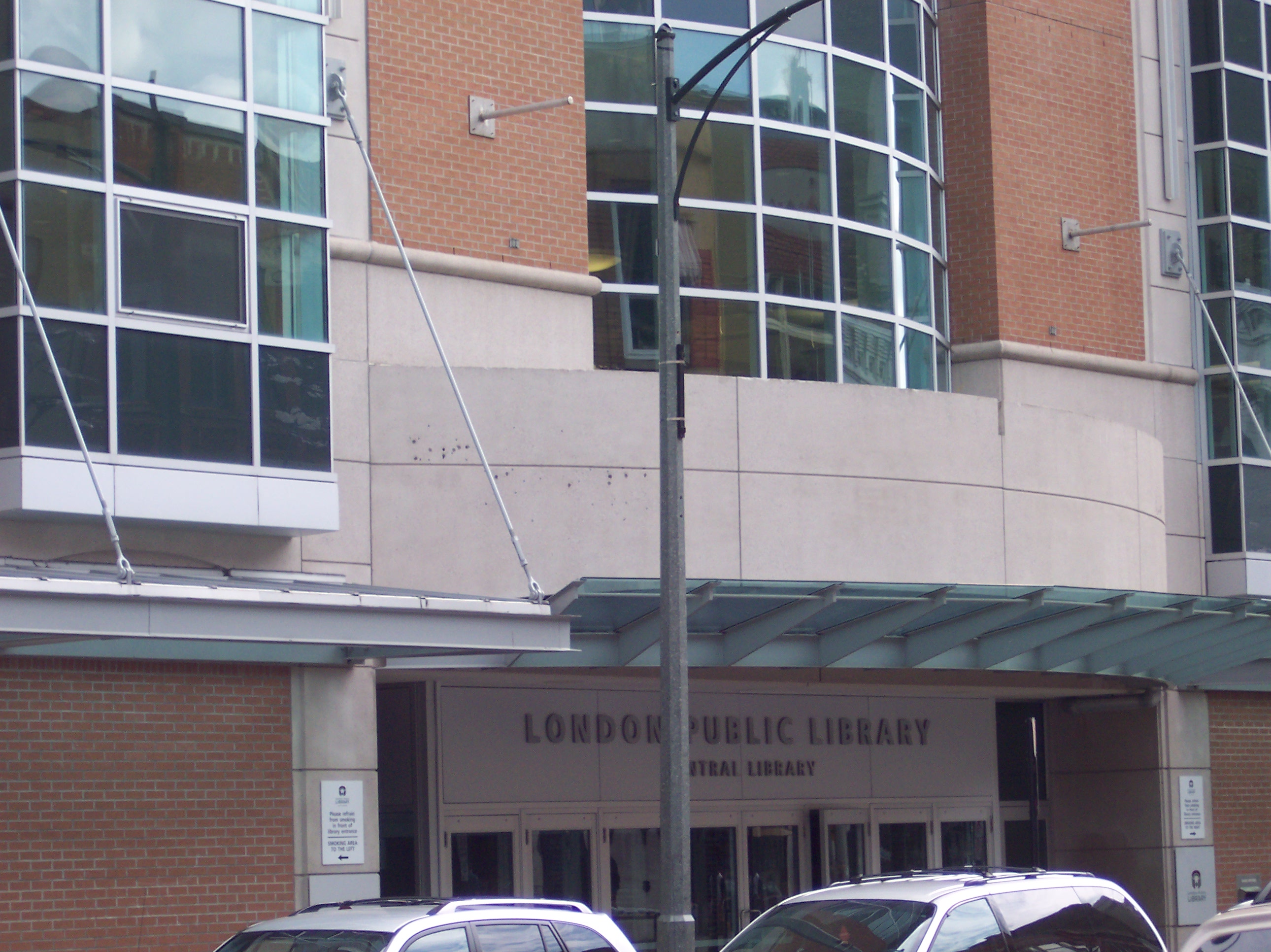
The London Public Library purchased the former The Bay store in 2001 for
$5.8 million Canadian, and did an extensive remodel of the interior. However,
the label scar of The Bay still remains on the upper concrete, as evidenced
above.
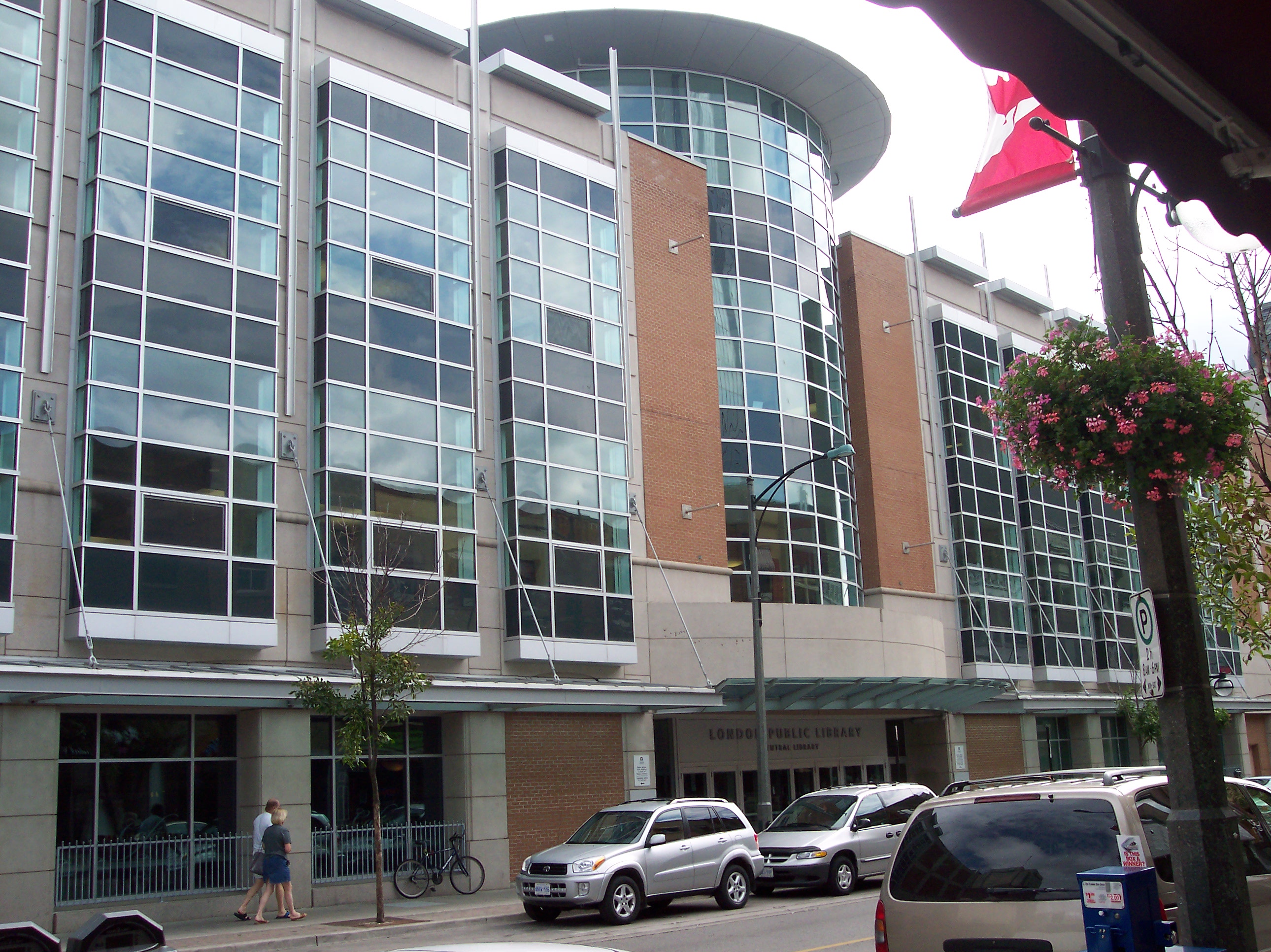
A second look at the former The Bay store, renovated and reopened as the
main branch of the London, Ontario Public Library.
Jeff Lowry's Commentary:
Posted March 21, 2005 (user submitted)
Galleria London is a 2-story mall that opened in downtown London, Ontario (population 350,000) in 1989. At the time, London was going through a retail boom, with major expansions at two suburban malls (Westmount and White Oaks) and the construction of a large mall (Masonville) in the north end of the city a few years earlier. Galleria was built on the site of Wellington Square, a small shopping centre that dated from the 60's. The new mall incorporated the existing Eaton's store and added an outlet of The Bay, a major Canadian department store, which moved from another downtown location.
Architecturally the mall was (is) quite impressive, with marble and vaulted skylights throughout. It was quite upscale for London, containing stores like Ralph Lauren and Harry Rosen, as well as London's first Gap and Eddie Bauer, and a six-screen theatre. Unfortunately, it ran into problems within a couple of years. The economy went south in the early 90's, causing a number of the high-end stores to close. The design was a problem as well. The mall was built over two city blocks, and the two sections of the first floor were cut off from each other. The upper floor had a 'racetrack' design, but all of the traffic going from Eaton's to The Bay went across the eastern walkway. The western walkway was pretty much dead within a few years. Furthermore, the mall had a fortress look to it, there were no windows or shops facing the surrounding streets downtown.
After a rocky start, the mall stabilized in the mid-90's as the economy came back. It was still a decent destination for my friends and me in high school. There was a new food court built on the second floor, and shops began moving back in. Problems began again in the late 90s when the troubled Eaton's chain started closing stores. The Galleria outlet survived the first round of closings in 1997 but was reduced to half its former size. Eaton's was never able to recover and the chain went out of business for good in 1999.
After that it was a quick slide downhill. Gap and Eddie Bauer had outlets in the suburban malls by that time so didn't need the downtown locations. The Bay moved to the former Eaton's space in the busy Masonville Place in 2000, and the chain stores began leaving in droves. The theatre closed in 2001, though it was later replaced with a second-run theatre. The mall owners have tried creative methods to fill the space, such as opening a call centre in the former Eaton's, while the city renovated the former Bay store to be the new location of the public library. I haven't been to the mall in a few years, but judging from the website it looks like there are about 50 stores left (down from 180 or so originally), most of them locally owned. It's a shame as this was by far the nicest mall in southwestern Ontario when it opened. London just wasn't big enough to support four malls. The three suburban malls are still thriving though.
Links:
www.gallerialondon.com mall web site

 Have information on
  Check out Deadmalls.com's Dead Malls Media archive!
Wiley Allen’s Commentary:
User submitted in 2019I worked at the Mahar shoe store when the Galleria opened. It truly was a marvel at the time. Unfortunately that design flaw did hurt businesses on the western walkway. Since Mahar was owned by Grafton Fraser Inc and we were on the bottom floor south side near Eatons we did very well for a mid price shoe store. Footpath was another store that was on the east overpass that did very well as a higher priced store and it was next to Sunglass Hut which helped a lot. Julia, the women's store, was on the west upper so not very desireable, but it did okay at first because it was strictly women's. The Grafton store was on the second floor northeast so it was a great location and I liked the clothes (and employee discount) so I bought a lot of my work stuff there. I also bought a lot at Eaton's because they had great sales and good quality. Fun times and do miss the place and people I worked with there (Mike, Melissa, Diane, Gilbert and John and Keith, our Company man)